Call for review of New Zealand’s approval of GE rice – GE Free New Zealand

Wyatt E Jones's avatarThe Polar Bl@st

There are renewed concerns about the approval by Food Standard Australia NZ (FSANZ) of GE Golden Rice, following a ruling by The Philippine Supreme Court that Syngenta must “cease and desist” any commercialisation and propagation of the GE rice.

The Philippine Supreme Court has required independent risk and impact assessments to be undertaken and for consent from the farmers and indigenous peoples before progressing. [1]

But the GE Golden Rice has already been approved by Food Standard Australia NZ (FSANZ). In 2017 Food Standards Australia New Zealand approved the entry of Genetically Engineered Golden Rice into the human food chain.

“This is an important decision and acknowledges the concerns of MASIPAG and the civil society organisations who took this case,” said Claire Bleakley, president of GE-Free NZ.

FSANZ are charged with upholding safeguards for public health and consumer protection in an effective and transparent way and should enable consumers to…

View original post 741 more words

Fighting for climate justice means being anti-war

Wyatt E Jones's avatarThe Polar Bl@st

Crass Fight War Not Wars Crust Punk Patch | Etsy

We cannot end climate change without ending war. The United States military is the planet’s largest single emitter of greenhouse gasses and consumer of oil. The US military and its weapons, consistently deployed to secure economic dominance for the few while ensuring suffering for the many, has no place on a just and livable planet. The corporate interests and fascist, militarist tendencies that lead humanity into conflict are the very same that view our Earth, its atmosphere, and its abundant life as a resource to be exploited for profit. Ending war means ending the war economy – the colonial system of extraction and exploitation that got us into this mess in the first place.

That a more peaceful world could be a result of the broad system change climate activists are calling for is no coincidence. But the theoretical intersection alone isn’t enough! Environmentalists and climate change activists must make…

View original post 333 more words

Peter Gelderloos: Why Green Energy Won’t Help Stop Climate Change

Wyatt E Jones's avatarThe Polar Bl@st

Why is green energy a sham? Let’s start with what we know.

*Climate change is real. Weather patterns around the planet are being violently disrupted and average temperatures are rising at a dangerous rate.

*The trigger for this change is the drastic increase in greenhouse gases in the atmosphere.

*The increase is being caused by energy production, by deforestation, by industrial pollution, and by current agricultural practices.

Therefore, we need to produce increasing amounts of green energy, energy from renewable sources like wind, solar, and hydro in order to remove one of the major sources of greenhouse gases.

If that conclusion sounded logical to you, you’ve just been had.

Confused? Go back to the premises and see if you can figure out how the argument for green energy is actually a non sequitur, a bait and switch.

The problem is actually deceptively simple. It is logical to believe that decreasing…

View original post 1,341 more words

Catastrophe Capitalism and EVs

Naomi Klein’s 2007 book, The Shock Doctrine: The Rise of Disaster Capitalism, as further developed by Antony Loewenstein’s Disaster Capitalism: Making a Killing out of Catastrophe, provides the analytical framework for understanding the drive to EVs by the developed centres of global capitalism.

The proposition is that governments, acting in concert with business interests, use major disasters or ongoing crises to introduce emergency measures that in other circumstances would provoke strong resistance.

EVs are the “shock therapy” to the global economic crises of the past 25 years or so. Catastrophe capitalism capitalises on climate change to smuggle in the concerted and costly promotion of electric cars. EVs are the Second Industrial Revolution within transport.

The Great Recession, beginning in 2008 – marked by banks unwilling to lend even to the few investors willing to take risks – is the most egregious of these crises. Compounding these features are the pre-existing and concurrent duality of huge amounts of both non-productive capital and unused productive capacity. In a word: stagflation – economic stagnation along with inflation – which characterises the modern world.

The cash reserves of non-financial corporations in the US alone at the end of 2020 were over $5-trillion. In rand terms (at 18.15 to the US dollar), the R90.75-trillion means South Africa’s budget for 2023 is only 2.5% of US idle capital in 2022.

As a share of US gross domestic product, its cash surplus almost tripled between the early 1990s and the end of 2021. Idle capital in South Africa amounts to between R1.3-trillion to R1.4-trillion in 2022, ie more than half the country’s national budget in 2022.

Idle productive capacity is an economy’s capacity to produce (supply) expressed as a percentage of total demand (determined not by social need but expected sales). In the US, the number was 77.9% in January 2023, with the average being 79.6% between 1967 and 2023. South Africa’s numbers are 78.8% in the 3rd quarter 2022 and 81.5% between 1971 and 2022.
Going ‘green’

Going “green” in response to climate change – more especially by governments otherwise seen to be doing nothing – allows huge public resources to be spent promoting EVs at a time when governments around the world are busy pleading “austerity”.

With revenue in the global EV market projected to reach $457.6-billion in 2023, along with an annual growth rate of 17.02% producing a projected market volume of $858-billion by 2027, using “green” to help ailing economies is rational politics for governments having to manage their respective political economies

At no small cost, governments – led by Japan in 1998, and greatly expanded due to the Great Recession of 2008 – have used taxes and some 13 broad incentives to induce manufacturers to produce and people to purchase EVs

Were it not for the perception of saving the planet, would these handouts to manufacturers and the rich be accepted with such silence? The international pricing gap between EVs and petrol/diesel engine vehicles is 12% for hybrids, 43% for plug-in hybrids and 52% for battery-electric vehicles (BEVs).

One has indeed to be rich to afford the comfort of doing one’s bit for slowing down climate change. Were it not for neglected railway and underground systems, along with the worldwide chaos on public roads and the opportunism of presenting EVs as “green” and green as good, not many people would tolerate the shock therapy.

EVs play another unrecognised though crucial role: they make the plague of private cars kosher – kosher is something generally approved of or seen to be correct, if I may draw on my cultural roots.

This ability to sanitise regardless of the level of contamination is remarkable.

The Horrific damage caused by forestry slash and vested interests

February 27, 2023

“Capitalists always want to privatise their profits and socialise their losses” – that’s the traditional socialist critique of how businesses are big fans of state intervention when it suits their interests. There seems to be a lot of that going around at the moment – many industries want government to help them be super-profitable, largely by reducing industry regulation and taxation, despite any damage they might cause.

However, there’s increasingly a public mood against the special pleading of such vested interests. This is evidenced in the criticisms now coming from across the political spectrum about the huge costs that New Zealand forestry businesses have been imposing on society, particularly with the multi-billion-dollar cost of “slash” debris that exacerbated or caused flood damage when Cyclone Gabrielle hit this month.

Even National’s leader Christopher Luxon echoed the socialist critique, when speaking about forestry last week in Parliament, describing it as “the only sector I know that gets to internalise the benefit and to socialise the cost”. He then talked about the need for further penalties and prosecutions of forestry businesses who fail to look after their own mess.

Although the timber industry isn’t unique in this regard, Luxon is quite correct to single them out. Forestry has become something of a case study in how vested interests have come to dominate the policymaking process, producing rules that favour the industry at the cost of society in general.

The role of slash in worsening the effects of the cyclone

The weather events of January and February have caused a horrific toll, yet much of it was avoidable. The destruction caused by the storms was made much worse by the way forestry operations have changed the land in places on the East Coast of the North Island.

One of the biggest problems is the litter foresters leave behind when they harvest pine trees. The industry terms the branches and debris left to rot on the hillsides as “slash”, and in large storms this litter is prone to be washed down rivers, causing mayhem. The debris forms dams and diverts the flow of water, flooding towns and farms, and knocking out bridges and roads. In Cyclone Gabrielle the impact of slash was enormous.

Illustrating this, a New Zealand Herald editorial complained on Friday that the word slash “is too gentle for the power and heft of avalanches of logs and branches that have again hurtled down hillsides on flood water, scouring out land and riverbeds, smashing bridges, roads and private property, endangering lives, cutting off communities and wrecking infrastructure.”

The Herald’s Fran O’Sullivan wrote in the weekend about the logging problem, concluding “what we have observed over the past fortnight simply puts New Zealand in the Third World category.” This is because in other developed countries, the slash problem is better regulated or even banned. It’s a problem that has been known about for many years, and yet in New Zealand the politicians have done virtually nothing about it, leaving society to pay for the damage caused by it.

The fact that the forestry companies can cause such great damage without being held accountable for the cost has astounded many. After all, citizens can be fined up to $5,000 under the Litter Act 1979, and if the litter endangers anyone, the fine increases and can include imprisonment.

Professor Anne Salmond likens it to deliberate vandalism: “If you were an individual and you took a bulldozer onto a property and destroyed their crops, knocked down their house and put lives at risk, you’d be in jail. And this is happening to hundreds of people, maybe thousands. This is not an Act of God, it’s an act of companies that put profit before environmental responsibility.”

Labour finally agrees to a ministerial inquiry, but will it do much?

Minister of Forestry Stuart Nash, has so far been highly supportive of the forestry industry, and has previously gone on record opposing a review of the slash problem. He suggested it is unnecessary, and that the forestry industry is best placed to self-regulate on this issue in conjunction with other stakeholders.

This stance has become untenable, and Prime Minister Chris Hipkins has overruled Nash, announcing a ministerial inquiry on Thursday. It will be headed by former National Party minister Hekia Parata, and also involves forestry engineer Matthew McCloy and former Ecan chief executive Bill Bayfield.

The Government’s inquiry is already getting a lot of criticism. One Tolaga Bay farmer has labelled it a “Clayton’s enquiry” because it’s so limited. Clive Bibby says the review is unlikely to get to the truth of the matter “given the parameters surrounding the terms of reference and the limited time for submissions. This version can best be described as a Clayton’s enquiry – the one you have when you’re not having an enquiry”.

Bibby suggests the inquiry has been deliberately designed to avoid too much being revealed, as the Government itself could be blamed: “Nash will know that any enquiry worth its salt will implicate Government ideologically driven policy as one of the main culprits when apportioning blame. That is why he has done his best to limit the opportunity for this one to get to the bottom of what really happened”. He argues that “successive governments have supported the expansion of an industry that has unfortunately consumed everything in its path”.

Another local resident, Professor Anne Salmond, has also expressed her reservations about the independence of inquiry, saying: “It shouldn’t be run by the Minister of Forestry because there are vested interests in there. The minister is accountable to the people of New Zealand, not the forestry companies.” She says the inquiry needs to be able cross-examine expert witnesses.

Fran O’Sullivan argues Labour has made a mistake ordering “the quick turnaround of the Hekia Parata-chaired ministerial inquiry, when a more full-scale “Commission of Inquiry with all the powers attendant with that” better matches the scale of the disaster. She suggests there might be public suspicion about the independence and transparency of the review.

And, in fact, Stuart Nash emphasised yesterday that his Government won’t be bound by the recommendations of the inquiry.

How has the forestry industry become so dominant in the political process?

Professor Anne Salmond has called New Zealand’s regulation of forestry “third world”. And in the weekend, political commentator Max Rashbrooke argued that “The regulations governing their activities, and the penalties for their misbehaviour, have both been weak.”

It seems that forestry businesses have successfully sheltered themselves from the application of tough rules for their sector. This is perhaps unsurprising since they constitute a $7 billion industry – and are therefore one of New Zealand’s true “big businesses”. And the industry is in a significant growth phrase. Newshub revealed last night that the rise in new forestry area had gone from 695 hectares in 2013 to more than 18,000 hectares in 2022.

With this economic size, they naturally have a lot of political clout. In arguing aginst further regulation of their sector, forestry points out new rules would reduce their productivity and profitability. And in their pleas against further regulation they also make a great appeal to how reliant the New Zealand economy is on forestry earnings and employment.

The lobbying power of forestry is therefore huge. As the Herald’s editorial said on Friday, “Critics suggest the sector, much of it foreign-owned, has got away with it for so long because it works ‘out of sight, out of mind’ and because it has deep pockets to lobby the Beehive and local authority politicians.”

One of those critics, Anne Salmond, has been reported as believing “Forestry has formidable lobbying power and deep pockets”. And last week, Herald agriculture journalist Andrea Fox argued that the “powerful forestry lobby was marshalling its forces” to prevent any sort of significant inquiry into their operations.

The politicians themselves are often very close to the forestry operators, too. For instance, the Minister of Forestry himself used to work in the industry, and is now in charge of regulating what his former colleagues do. In 2020, when he was appointed, Nash was able to boast of an “extensive network of contacts in the forestry sector”.

Stuart Nash also carries out much of his election fundraising in this sector. In the last three elections he declared large donations totalling $99,000, $27,500, and $49,504. In 2020 about half of it came from forestry and timber companies. One timber businessman explained his financial backing for Nash, saying “It is important to the economy that government has politicians who understand industry.”

Being a Minister of Forestry who has been bankrolled by the sector he regulates does not mean he has broken any rules or done anything wrong. But it does raise questions about conflicts of interest, and about whether Nash’s funding has fostered a highly-favourable orientation towards the sector his donors come from. The public might well suspect that he has become too close to this vested interest.

The public and media are now putting Nash under pressure for his pro-forestry business orientation. In fact, a Herald editorial on Friday celebrated the increased pressure on Nash, saying “it’s about time”.

Nash answered these criticisms yesterday on TVNZ’s Q+A, claiming, “I’m not an apologist for the forest sector.” But as the human misery and billions of dollars of damage mount from unregulated forestry practices, the public are starting to push back on the free ride that the sector is still receiving. And it won’t just be socialists on the left and Christopher Luxon on the right demanding that vested interests pay their way, but a wider public that is increasingly angry with how such unfairness contributes to human disasters.

Dr Bryce Edwards https://democracyproject.nz/2023/02/27/bryce-edwards-the-horrific-damage-caused-by-forestry-slash-and-vested-interests/

ECOLOGY IN TIMES OF WAR

In face of the health consequences, and when seeing the impact of weapons on the living planet, one could think it’s not relevant to care about ecology when there’s war, but Freedom fighters of North-Eastern Syria’s Autonomous Administration show us there is more to war and ecology than what it seems at first. Let’s dig into the third pillar of the Rojava revolution, and see how it connects to the struggle for freedom.

The understanding of ecology that is given to us by capitalist modernity, through ads, government campaigns and liberal culture, is usually to take care of the environment in an individual, immediate way. For example, by not throwing trash on the floor, and instead putting it in the bin, so that it gets (maybe) recycled later. Or by shutting all the lights off when going to bed.

This way of thinking implies that what we want to achieve through ecology (hopefully, a healthy living environment all around the planet) can be done through these simple steps, that any individual can do (and therefore should feel responsible of doing so).

But what if we defined that a healthy living planet can only be achieved by organizing our society through democratic self-administration, with women’s all-round autonomy, and through organizing our self-defense, standing ready to use machine guns with heavy environmental impact when facing fascist threats ?

The mentality implied by this definition of ecology is one where our caring for the living planet pushes us to organize collectively, and where long-term thinking prevails on the short-term when it comes to defending and enhancing our surroundings, both social and ecological. It is also one where men’s domination of women and nature is confronted in a way that adresses both issues at the same time, making it a radical eco-feminist approach to life and society, where women and men learn to live together again, outside of traditional and modern master-and-slave patterns.

Such a proposition is made here, and constitutes the paradigm of the Autonomous Administration of North and Eastern Syria. Of course, although the self-defense part is often highlighted, as a relatively new proposition for women’s liberation movement and ecological struggles, the main focus when building an ecological society is not this one at all, but rather the diversity and the depth of our social interactions, with a whole ecosystem of institutions and approaches to life inside of society itself.

In this paradigm, the well-being of the environment is set on two distinct although intertwined time schedules : in general time, ecological committees actively launch and manage projects, but when under attack, the self-defense of the democratic society comes first, in order to stop capitalism-led destruction as soon as possible, and defend the premises of the ecological society (that is, the society that holds the seeds of ecology in its core). Society thus has a defense mechanism similar to that of many animals and plants : allocating all resources into retracting and attacking when under pressure, while continuing normal course of life when not, which includes building up defense.

Th art of ecological war : Know your enemy

Current wars are led by imperialist forces representing the interests of patriarchal individuals and capitalist companies which have, as a definition, an anti-ecological motto of “grow or die”, to which they are tied by the mechanism of market. As social ecologist Murray Bookchin puts it : “The present social illness lies not only in the outlook that pervades the present society; it lies above all in the very structure and law of life in the system itself, in its imperative, which no entrepreneur or corporation can ignore without facing destruction: growth, more growth, and still more growth.” Indeed, individuals who want to dominate (“be successful”) must place themselves in a market where all their production keeps losing value the second it is produced, with competitors generating more and more pressure to keep growing, in order to continue being on top. This process eventually brings every element of both material and social realms to be transformed in a master-to-slave or subject-to-object relationship, from existence to commodity, from being free and equal to being permanently dominated.

As history shows, especially when paying attention to the importance of symbolism in its course (notably through mythology), it is the patriarchal mindset that generated the enclosed environments (emotional, psychological and physical) in which domination was maintained, that gave birth to the first city-States and served as a base for the capitalist civilization as we know it. Social domination would find very soon its expressions in physical domination and economical domination, leading, city after city, empire after empire, to modern capitalism and slavery, perpetuating patriarchal domination in a worldwide scale.

The course of this his-story, undermining her-story, leads to nowhere but death, since the infinite commodification, ideologically and materially maintained, knows no ethical or physical barrier, as is shown by the recent scandals of the burning Amazonia and organized pedophilia, and by constantly happening industrial destruction and child marriages. From within the male-shaped paradigm, there is no stopping of this ever-lasting self-propelled competition of domination between elements, with the current main entities being the nation-states and supranational companies.

It shouldn’t come as a surprise, knowing this development in history, that the Pentagon is the world’s largest institutional user of petroleum and correspondingly, the single largest producer of greenhouse gases (GHG) in the world. Neither should it surprise us to hear that 100 companies are responsible for 71% of global emissions. Their domination of nature is a logical output of their political and economical domination. Or, to formulate it the other way around, destruction of nature is the most fruitful enterprise, inside of capitalism, after women’s exploitation, which is the base of all industry. And let us not be fooled into thinking that it could have been another way, that other states or companies or individuals would have behaved differently inside of this paradigm or could do so in the future, for as long as we don’t radically propose to fight the domination they stem from, we will keep participating in it and we would eventually grow to become the new main oppressor, if not dying while trying to do so. To not set ourselves in the fight against the hegemony of dominant male mentality and physical power, is to empower it by giving it time to gather forces.

Ecology and mind : a self-reflecting mirror

One aspect in which ecology relates to war is in the mentality generated through fighting. Using the concept of mental ecology introduced by Felix Guattari, we can understand human mind as a flexible entity that interacts with its surroundings, projecting ideas and emotions in it, and reacting to the ones it receives. As the interactions between mind and environment go on, they end up shaping one another. On the one hand, of course, the human mind appeared as a creation of nature, and is part of it, as an animal. On the other hand, it is through the human mind that we think of nature, and that we end up acting upon it, by cutting a tree for example, if this tree doesn’t fit with the plan we had in mind.

Another understanding of mental ecology is that our current ideas and emotions come as a legacy of all previous ideas and emotions carried by individuals throughout history. This makes our own consciousness a living philosophy inherited through all the interactions of the universe that led to this very moment. And to make sense out of the incommunicable amount of information and possibilities that this realization lets us consider, one can track down the history of ideas that make us who we are, that is, the history of mythologies, philosophies and ideologies – in the end, societies, of which they are reflections. To do so, to recover the origins of our thoughts, is to make sense, as when we discover the etymology of a word, such as “berxwedan” – resistance in Kurdish : “dan” – to give, “xwe” – yourself, “dan” – in front, so resistance is to give yourself when facing something. Or “Jiyan” – life : a direct declination of “Jin” – woman. In doing this self-education about our history, indeed ourselves, we might find tools, such as songs and drawings, to strengthen our stance against the dominant male hegemony, empowering our mind’s self-defence, which will give birth to a more resilient and more ecological society, one where conflicts get solved through reconciliation instead of annihilation.

In the context of war, mind is put under extreme conditions as it faces extinction at any time, and in order to keep on going and not start running away from the danger, it needs something to hang on to. This gives way to transcendental experiences of “holy war”, and surely a strong sense of comradery can be found in the fact of going to the frontline together to fight fascists. But this opens also the way to a limited understanding of reality that gets reduced, in the crucial moment, to a simple “us against them”. This ecology of mind, reduced to two factors, gets then projected in the entire society, when this society is centered around war. In a patriarchal society or, said differently, in the context of a war on women, the male dominating mentality will eventually reduce all relationships, all situations of life, to this bottom-line thinking : I need to dominate “this” or “that” in order to permanently re-assert my masculinity, my domination of women.

So the war starts there. In the mindset that we have when facing the current developments of capitalist modernity. Are we, especially men, ready to change our behaviours in order to fulfill claimed goals (remember, here, a healthy living environment all around the planet) ? Are we ready to let other people comment our individual practices, inside of communal, democratic circles, accepting criticism and making meaningful self-criticism ? Are we ready to let the women lead the way of their own emancipation, outside of our fantasies and physical embrace, and work together towards our common liberation ? Are we ready to make peace with other men, getting out of the dishonest and competitive schemes of man and brotherhood that we know of ? Are we ready to fight against the war mentality inside of us ?

The biological revolution

French eco-feminist and revolutionary homosexual activist Francoise d’Eaubonne proposed an understanding of revolution as mutations in the social “genetic” code. In a given society, if a new element comes to disrupt the homogeneous course of it, we can say that it is somewhat similar to a gene being replaced in the society’s DNA, through mutation. As is the case biologically, these mutations can appear when giving birth to new individuals inside of a species, the new generation then challenges the older one, youth being a constant revolutionary force, and maybe simply evolutionary when considering societies.

Similarly to a new gene in a biological entity, a new set of rules can appear inside of a society, when a new group, a new organization is formed. But this new gene is not necessarily predominant, it can remain present without taking over. As for example with green eyes, or anarchists. And even when it does take over, it still continues to be part of the same biological entity, that has transformed itself – one cannot say a new species was made out of the blue. Applied to the political world, it can be a valuable lesson for the Left to recognize it doesn’t make sense to see itself as separated from society, it was always part of it. Maybe it is a revolutionary thought for it to consider being the whole of society, in order to impulse a general movement for change. Therefore, inside of a capitalist, patriarchal society Leftists should work to change the society entirely, and not just in Leftist circles – which try to be perfectly horizontal societies, out of the blue.

To see humans and society in such a socio-biological perspective also leads to blurring the limits between them and other species and with nature itself. In this sense, it is interesting to note from statistics that the Syrian Civil War has killed way more non-human animals then human animals. If it is not possible to compare the importance of different lives, and even more when they’re from different species, what we can say at least is that the war that is waged on the Kurds, Arabs, Assyrians, Yezidis, Armenians and Turkmens of the region, is also waged on the goat, sheep, cows, chicken and dogs of the same territory, as well as on the plants, with Turkish or jihadist-led mercenaries setting fire to the wheat fields and olive trees of Rojava. What is being attacked is the entire ecosystem.

And what would a revolution be, in biological terms ? A revolution cannot be the mere mutation of one of the genes, which would be reformism, with most of the genetic chain remaining the same. It is rather the change of all the genetic code of our society, which in other words could relate to changing civilization as a whole.

With its holistic approach and all-embracing concepts, democratic confederalism is such a proposition, of a new genetic code for an organic society, incorporating a strong immune system in its DNA, and with women’s autonomy making the movement’s dynamics a powerful double helix. But although women’s autonomy might be a strong feature of this revolution, it is also important to see that the women’s perspective is not limited to it. To continue with the biological metaphor, we can say that the core of the new genetic code, the very important and basic genes that have kept the old genetic code from going fully corrupt, are the social values of care, reproduction and defense, that mainly women had been protecting. This is why the new proposition is not only featuring women’s autonomy, it is making women the new center of society, its very spine, to reinforce and unveil the role they had actually played in maintaining society alive until now.

Abandoning ecology when confronting war : a patriarchal approach

“No ecology when there’s war”. To react in such a way is part of the mentality that produces the thought “No democracy when there’s war”, a thought that has appeared throughout history even in the socialist camp, legitimizing hierarchical authority and setting the organization of a democratic society to later on, in order to create a stronger united front against the fascist or imperialist attacks. This, as we know, opened the door to socialist revolutions being taken over by tyrants with state mentality, as most recently happened in Nicaragua, for example.

And as a common measure to most struggles of the past 5000 years, is the thought of “no feminism when there’s war”, expressed through the systematic rape and murder of women throughout war history until this very day. But this observation cannot stop there, understanding where war comes from in our society, we understand that it is actually the war on women that is the fundamental starting point of all wars.

As bell hooks, Abdullah Öcalan and other feminist writers analyze it, it is part of the masculine culture to place war as an absolute, to which everything else is subdued. Recently, Bese Hozat described war as “the most terrible invention of the male mind”. She says, “Wars are the dominant male invention. The ruling man has fortified and maintained his power with wars. The state is the embodiment of male-dominated power. War is the food that keeps that body alive. While this food is the main source of life for the dominant male, it is a deadly poison for women, society and nature”.

So it is a natural effort for us to defend the possibility of a democratic, gender-egalitarian, and ecological society through, not war, but self-defense against the war imposed on us. This is the only legitimate war to wage. Also, our understanding of war shouldn’t be limited to the confrontation on the front line, but we can see it as a war within ourselves to hold up to our radical beliefs everyday, to go out in front of society and engage in action, such as organizing in our neighborhood community. The war waged on us by capitalist modernity is as much of a psychological, emotional war as a physical one, so let’s not lose our morale, and strongly affirm : yes, our struggle is ecological, for it is the ecological people’s war, it’s the revolutionary people’s war.

Taken from here: https://makerojavagreenagain.org/2019/10/11/ecology-in-times-of-war/

Extinction Repression: How the state criminalizes climate activists

From the UK’s Green Anti-Capitalist Front

We can imagine the surprise of Extinction Rebellion (XR) members last week, reading themselves described as ‘extremists’ and ‘anarchists’. These labels come courtesy of the former head of counter-terrorism for the Metropolitan Police Richard Walton and his co-author Tom Wilson, in a report demanding that ‘the honeymoon that Extinction Rebellion has enjoyed to date needs to come to an end.’ The days of cops skateboarding along bridges and dancing with protestors may soon be over. A different treatment now awaits XR’s rebels. They may not understand why. But we understand all too clearly. 

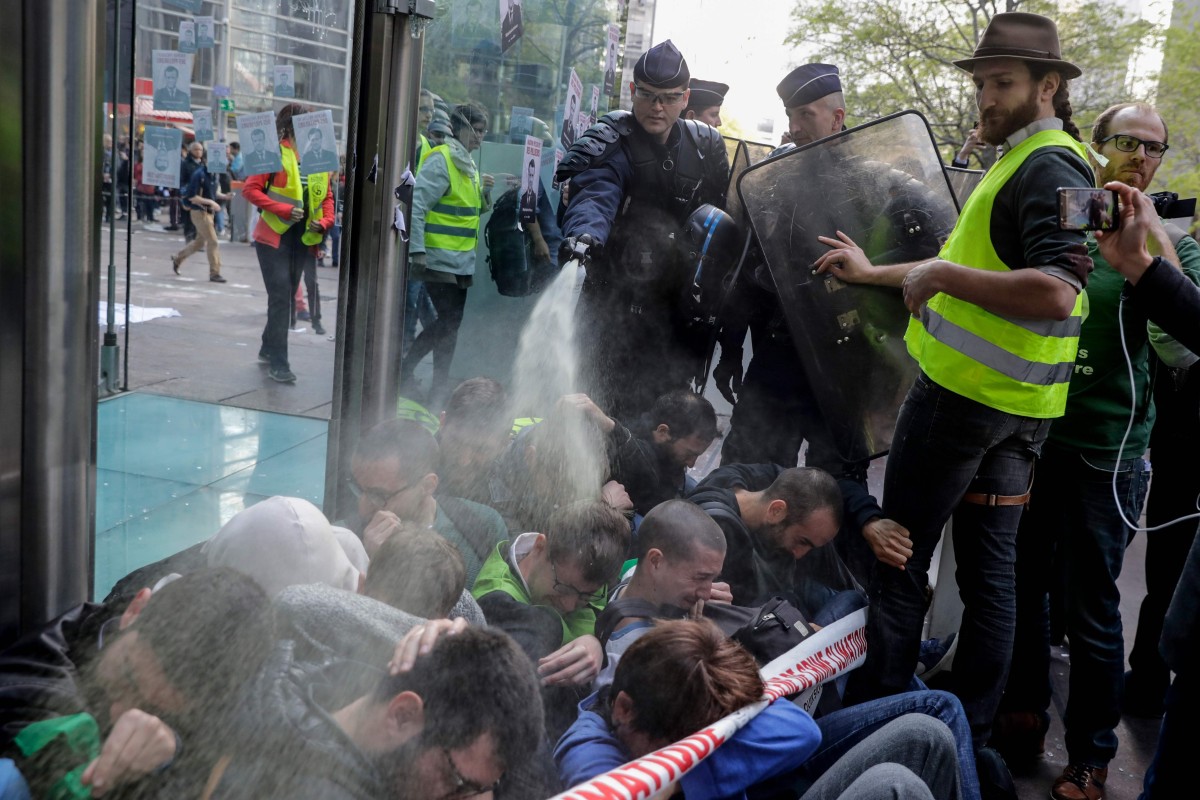
Pictured: Riot police pepper-spraying non-violent Extinction Rebellion protestors in Paris

Walton retired from the Metropolitan Police in a disgraceful attempt to dodge corruption charges surrounding the MacPherson Inquiry.1 This inquiry had been called in response to the Met’s mishandling of the racially-motivated murder of Stephen Lawrence. While this inquiry was ongoing, a spycop for the Met going by ‘David Hagen’ was spying on the Lawrence family. Bob Lambert (the spycop involved in infiltrating Greenpeace), Richard Walton and ‘David Hagen’ met in Lambert’s garden where intelligence on the Lawrence family and the campaign groups supporting them was passed to Walton so he could prepare the police commissioner for the Met’s response. Far from Walton being just one rotten apple, the MacPherson Inquiry had been launched to investigate corruption and racism within the Metropolitan Police and concluded that the Met was ‘institutionally racist’.

This institutionalized racism pervades the Met to this very day,2 as we saw in Extinction Rebellion’s ‘Week of Rebellion’, when on the 19th April London’s cops attacked and arrested a black woman, who was unaffiliated with XR, for simply trying to walk down a street.3 Indeed we saw this racism extend to those in XR who were so keen to work with the police, as on the 22nd April XR’s police liasons in Marble Arch reported a group of Asian activists for crimes they had not commit, subjecting them to detainment and immigration checks.4 The authors of this report are no strangers to racism either: in their previous report for the Policy Exchange (which has a habit of publishing racist reports based on fabricated evidence 5), Walton and Wilson claimed that defining ‘Islamophobia’ as a form of racism would ‘cripple’ counter-terrorism policing.6 

The police call their own violence ‘law’ and ‘justice’, whilst calling the self-defensive actions of individuals ‘crime’ and ‘extremism’. This report is yet more proof that it does not matter how family-friendly your image is: whether you’re a grieving family member or a nonviolent climate protest, if you threaten the status quo the state must declare you a threat. XR can sing songs and make art and tell the cops they love them, but if there is even a chance that they will challenge the system they must be crushed. 

The authors are not subtle about this. In a report called ‘Extremism Rebellion’, the word ‘extremism’ and its variations only occur 19 times; ‘environmental’, 48 times. Variations on ‘capitalism’ appear 101 times.7 

It is obsessive. Even we anti-capitalists do not usually devote so much breath to the word. 

What is clear to anyone masochistic enough to read the 73-page report: Walton and Wilson are especially terrified by the possibility of XR presenting compelling non-capitalist visions of society – far more terrified than he is by the prospect of the ecological devastation against which we fight. He claims XR are at heart secret anti-capitalists, and tries to find evidence of such unforgivable politics. (Well, if we have been missing a trick and it is actually true that ‘at its core, Extinction Rebellion is an anti-capitalist movement’, the Green Anti-Capitalist Front are happy to hear it.)

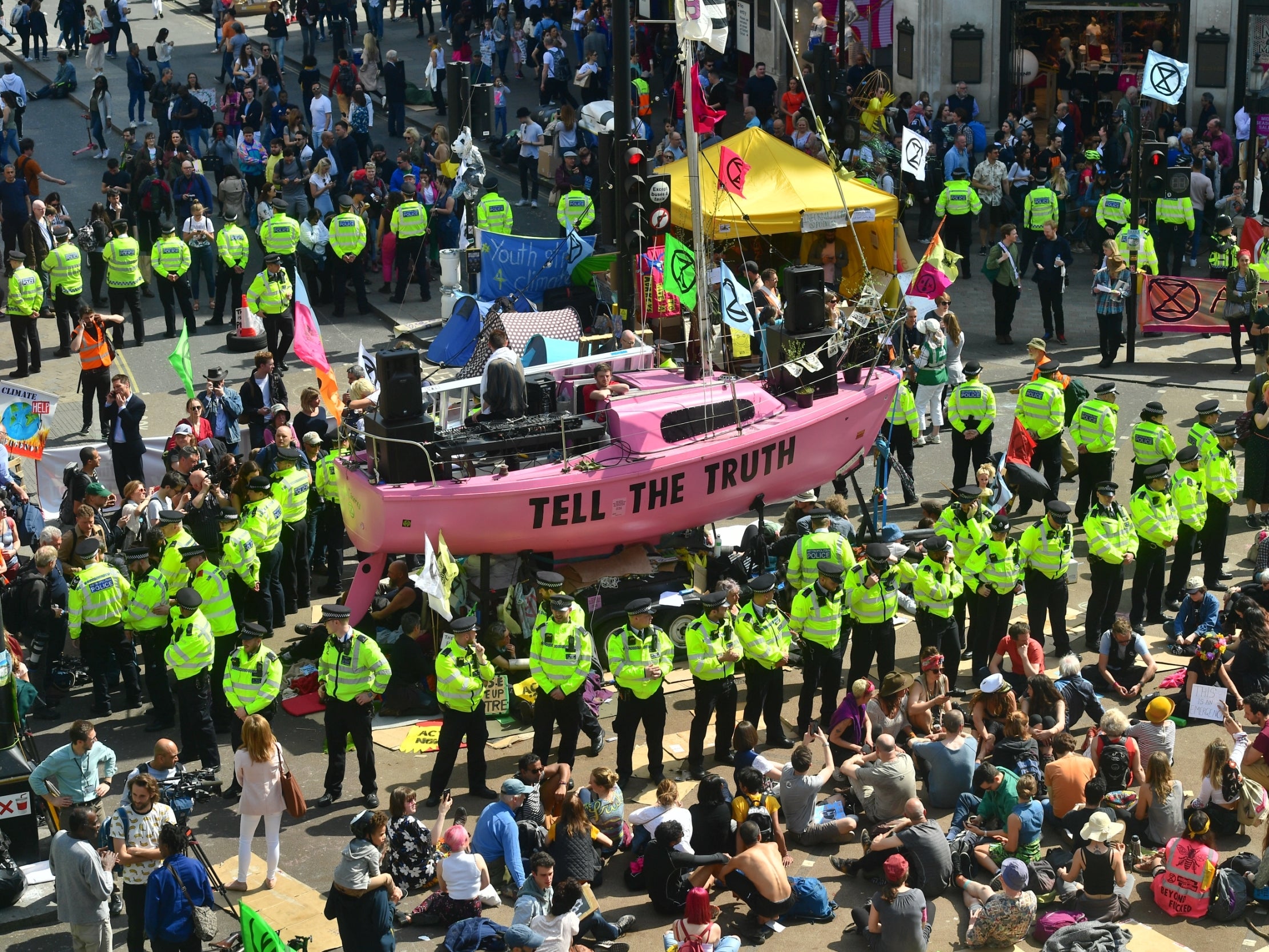
Pictured: Police blocking off the area around the pink ‘Tell The Truth’ boat

It is no coincidence that they focus on the slogan strung across the pink boat – SYSTEM CHANGE NOT CLIMATE CHANGE – because that call for system change is at the heart of XR’s ‘extremist’ threat. And so the authors call for a far-reaching response from government: ‘Simply acting against the protestors, however, will not be enough to undermine Extinction Rebellion, which may be on the verge of becoming a wider social movement […] more also needs to be done to counter the extreme message of Extinction Rebellion who argue that catastrophe can only be averted if the free market and economic growth are abandoned.’7 

It is also no coincidence that this report is being published by the Policy Exchange, a right-wing think tank set up by a cabal of Conservative Party politicians and business executives including Nick Boles, Michael Gove, Frances Maude and Archie Norman.8 
Their current chairman is Alexander Downer, former Australian Foreign Minister turned fossil fuel lobbyist, who is currently on the boards of Lakes Oil and surveillance-tech giant Huawei.91011 Policy Exchange is also one of the few think tanks in the country that refuses to release information about their funding, however we do know that they have received money from BP and Peter Cruddas (a corrupt tory donor with investments in fossil fuels).1213 Suffice to say, Policy Exchange has a vested interest in the preservation of the fossil fuel industry, the expansion of state powers and the proliferation of surveillance capitalism.

The recommendations of this report would affect us all, and it is gruesomely easy to imagine how euphemisms like these might play out in reality: ‘Legislation relating to public protest needs to be urgently reformed in order to strengthen the ability of the police to place restrictions on planned protest and deal more effectively with mass law-breaking tactics.’ Naturally: the police want to handle protestors even more brutally – they are frustrated this is not currently legal – they call for even more brutality to be made legal, then. This is the system change they want.

Pictured: Heavily armed police walking through Extinction Rebellion’s Parliament Square blockade

What happens next will probably not surprise us. If people like Richard Walton get their way, the bare minimum will be increased restrictions on protests, harsher legislation, heavier sentencing, and all the other methods with which we are sadly familiar. This is no new story. That does not mean we should ignore it.

This report claimed that ‘Extinction Rebellion is now at a crossroads’, and we are watching to see which direction it takes. How will it respond to increased repression? Will it change the way it describes police and prisons once so many of its rebels experience their violence first-hand? Will it tone down its criticisms of capitalism in an attempt to appease the police and conservative politicians? Or will it understand that being a rebel means acknowledging the brutal reality of state repression and the systems it exists to defend, and struggling on in defiance of this?

The Green Anti-Capitalist Front stands in solidarity with all those who suffer from state violence and repression in the fight against climate change, and we do not look forward to seeing XR’s rebels being met with increased brutality. We support the challenges to capitalism which would make XR such a source of fear for some, and we know that we, too, will be met with brutality when we make them.

Footnotes

1. Police chief accused of covering up secret ploy to spy on the family of murdered Stephen Lawrence dodges disciplinary action by retiring by Stephen Wright, for the Daily Mail 
2. Metropolitan police still institutionally racist, say black and Asian officers by Hugh Muir, for the Guardian 
3. Police officer pushes woman at Extinction Rebellion protest by News Leak 
4. Selling Extinction by Prolekult 
5. Disastrous Misjudgement? by Peter Barron, for the BBC 
6. Islamophobia – Crippling Counter Terrorism by Richard Walton and Tom Wilson, for the Policy Exchange 
7. Extremism Rebellion by Richard Walton and Tom Wilson, for the Policy Exchange 
8. Thinkers behind fresh Tory policies move up in party hierarchy by David Hencke, for the Guardian 
9. Downer joins Lakes Oil as Rinehart board appointee by Peter Cai, for the Sydney Morning Herald 
10. Huawei names John Brumby, Alexander Downer board members by Michael Sainsbury, for the Australian 
11. Policy Exchange is delighted to announce that our next Chairman of Trustees will be Alexander Downer, High Commissioner of Australia by the Policy Exchange 
12. After Blair by Ravid Chandiramani, for Brand Republic 
13. Financial Statement 2008-09, p. 11.; Financial Statement 2009-10, p. 13. by the Peter Cruddas Foundation

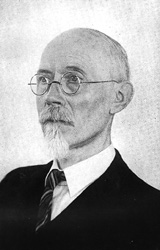
The Destruction of Nature (1909 by Anton Pannekoek)

Reproduced from The Socialist party of Great Britains’s official blog https://socialismoryourmoneyback.blogspot.com/2019/07/the-destruction-of-nature-1909-by-anton.html

This early article by the renown socialist scholar, as well as respected astronomer, Anton Pannekoek, goes a long way to dispel the idea that socialists have held a very productivist view about mankind’s relationship with the environment. It deserves a wide circulation within the ecology movement. 

The destruction of nature (Anton Pannekoek, 1909)

There are numerous complaints in the scientific literature about the increasing destruction of forests. But it is not only the joy that every nature-lover feels for forests that should be taken into account. There are also important material interests, indeed the vital interests of humanity. With the disappearance of abundant forests, countries known in Antiquity for their fertility, which were densely populated and famous as granaries for the great cities, have become stony deserts. Rain seldom falls there except as devastating diluvian downpours that carry away the layers of humus which the rain should fertilise. Where the mountain forests have been destroyed, torrents fed by summer rains cause enormous masses of stones and sand to roll down, which clog up Alpine valleys, clearing away forests and devastating villages whose inhabitants are innocent, “due to the fact that personal interest and ignorance have destroyed the forest and headwaters in the high valley.”


The authors strongly insist on personal interest and ignorance in their eloquent description of this miserable situation but they do not look into its causes. They probably think that emphasising the consequences is enough to replace ignorance by a better understanding and to undo the effects. They do not see that this is only a part of the phenomenon, one of numerous similar effects that capitalism, this mode of production which is the highest stage of profit-hunting, has on nature.


Why is France a country poor in forests which has to import every year hundreds of millions of francs worth of wood from abroad and spend much more to repair through reforestation the disastrous consequences of the deforestation of the Alps? Under the Ancien Regime there were many state forests. But the bourgeoisie, who took the helm of the French Revolution, saw in these only an instrument for private enrichment. Speculators cleared 3 million hectares to change wood into gold. They did not think of the future, only of the immediate profit.


For capitalism all natural resources are nothing but gold. The more quickly it exploits them, the more the flow of gold accelerates. The private economy results in each individual trying to make the most profit possible without even thinking for a single moment of the general interest, that of humanity. As a result, every wild animal having a monetary value and every wild plant giving rise to profit is immediately the object of a race to extermination. The elephants of Africa have almost disappeared, victims of systematic hunting for their ivory. It is similar for rubber trees, which are the victim of a predatory economy in which everyone only destroys them without planting new ones. In Siberia, it has been noted that furred animals are becoming rarer due to intensive hunting and that the most valuable species could soon disappear. In Canada, vast virgin forests have been reduced to cinders, not only by settlers who want to cultivate the soil, but also by “prospectors” looking for mineral deposits who transform mountain slopes into bare rock so as to have a better overview of the ground. In New Guinea, a massacre of birds of paradise was organised to satisfy the expensive whim of an American woman billionaire. Fashion craziness, typical of a capitalism wasting surplus value, has already led to the extermination of rare species; sea birds on the east coast of America only owe their survival to the strict intervention of the state. Such examples could be multiplied at will.


But are not plants and animals there to be used by humans for their own purposes? Here, we completely leave aside the question of the preservation of nature as it would be without human intervention. We know that humans are the masters of the Earth and that they completely transform nature to meet their needs. To live, we are completely dependent on the forces of nature and on natural resources; we have to use and consume them. That is not the question here, only the way capitalism makes use of them.

A rational social order will have to use the available natural resources in such a way that what is consumed is replaced at the same time, so that society does not impoverish itself and can become wealthier. A closed economy which consumes part of its seed corn impoverishes itself more and more and must inevitably fail. But that is the way capitalism acts. This is an economy which does not think of the future but lives only in the immediate present. In today’s economic order, nature does not serve humanity, but capital. It is not the clothing, food or cultural needs of humanity that govern production, but capital’s appetite for profit, for gold.


Natural resources are exploited as if reserves were infinite and inexhaustible. The harmful consequences of deforestation for agriculture and the destruction of useful animals and plants expose the finite character of available reserves and the failure of this type of economy. Roosevelt recognises this failure when he wants to call an international conference to review the state of still available natural resources and to take measures to stop them being wasted.

Of course the plan itself is humbug. The state could do much to stop the pitiless extermination of rare species. But the capitalist state is in the end a poor representative of the good of humanity. It must halt in face of the essential interests of capital.
Capitalism is a headless economy which cannot regulate its acts by an understanding of their consequences. But its devastating character does not derive from this fact alone. Over the centuries humans have also exploited nature in a foolish way, without thinking of the future of humanity as a whole. But their power was limited. Nature was so vast and so powerful that with their feeble technical means humans could only exceptionally damage it. Capitalism, by contrast, has replaced local needs with world needs, and created modern techniques for exploiting nature. So it is now a question of enormous masses of matter being subjected to colossal means of destruction and removed by powerful means of transportation. Society under capitalism can be compared to a gigantic unintelligent body; while capitalism develops its power without limit, it is at the same time senselessly devastating more and more the environment from which it lives. Only socialism, which can give this body consciousness and reasoned action, will at the same time replace the devastation of nature by a rational economy.


Zeitungskorrespondenz N° 75, 10 July 1909,


Original German, and a French translation, can be found here:http://pantopolis.over-blog.com/2019/07/anton-pannekoek-la-destruction-de-la-nature-1909.html

Green Growth Debunked

Is economic growth compatible with ecological sustainability? A new report shows that efforts to decouple economic growth from environmental harm, known as ‘green growth’, have not succeeded and are unlikely to succeed in their aim.
There are seven reasons to be sceptical about green growth in the future.

Each of them taken individually casts doubt on the possibility for sufficient decoupling and, thus, the feasibility of “green growth.” Considered all together, the hypothesis that decoupling will allow economic growth to continue without a rise in environmental pressures appears highly compromised, if not clearly unrealistic.


1 Rising energy expenditures. When extracting a resource, cheaper options are generally used first, the extraction of remaining stocks then becoming a more resource- and energy-intensive process resulting in a rising total environmental degradation per unit of resource extracted.


2 Rebound effects. Efficiency improvements are often partly or totally compensated by a reallocation of saved resources and money to either more of the same consumption(e.g. using a fuel-efficient car more often), or other impactful consumptions (e.g. buying plane tickets for remote holidays with the money saved from fuel economies). It canalso generate structural changes in the economy that induce higher consumption (e.g. more fuel-efficient cars reinforce a car-based transport system at the expense of greener alternatives, such as public transport and cycling).


3 Problem shifting. Technological solutions to one environmental problem can create new ones and/or exacerbate others. For example, the production of private electric vehicles puts pressure on lithium, copper, and cobalt resources; the production of biofuel raises concerns about land use; while nuclear power generation produces nuclear risks and logistic concerns regarding nuclear waste disposal.


4 The underestimated impact of services. The service economy can only exist on top of the material economy, not instead of it. Services have a significant footprint that often adds to, rather than substitute, that of goods.


5 Limited potential of recycling. Recycling rates are currently low and only slowly increasing, and recycling processes generally still require a significant amount of energy and virgin raw materials. Most importantly, recycling is strictly limited in its ability to provide resources for an expanding material economy.


6 Insufficient and inappropriate technological change. Technological progress is not targeting the factors of production that matter for ecological sustainability andnot leading to the type of innovations that reduce environmental pressures; it is not disruptive enough as it fails to displace other undesirable technologies; and it is notin itself fast enough to enable a sufficient decoupling.


7 Cost shifting. What has been observed and termed as decoupling in some local cases was generally only apparent decoupling resulting mostly from an externalisation of environmental impact from high-consumption to low-consumption countries enabled by international trade. Accounting on a footprint basis reveals a much less optimistic picture and casts further doubt on the possibility of a consistent decoupling in the future.

Full Report: https://mk0eeborgicuypctuf7e.kinstacdn.com/wp-content/uploads/2019/07/Decoupling-Debunked-FULL-for-ONLINE.pdf

An Anarchist Solution to Global Warming ~ Peter Gelderloos

How would anarchists suggest we reorganize society in order to decrease the amount of greenhouse gases in the atmosphere and to survive an already changed world?

There is no single anarchist position, and many anarchists refuse to offer any proposal at all, arguing that if society liberates itself from State and capitalism, it will change organically, not on the lines of any blueprint. Besides, the attitude of policy, seeing the world from above and imposing changes, is inextricable from the culture that is responsible for destroying the planet and oppressing its inhabitants.

Nonetheless, I want to outline one possible way we could organize our lives, not to make a concrete proposal, but because visions make us stronger, and we all need the courage to break once and for all with the existing institutions and the false solutions they offer. For the purposes of this text I’m not going to enter into any of the important debates regarding ideals — appropriate levels of technology, scale, organization, coordination, and formalization. I’m going to describe how an ecological, anti-authoritarian society could manifest itself, as it flows from the un-ideal complexity of the present moment. Also for simplicity’s sake, I won’t enter into the scientific debate around what is and isn’t sustainable. Those debates and the information they present are widely available, for those who want to do their own research.

I base the description of this future possible world both on what is physically necessary and what is ethically desirable, in accordance with the following premises.

  • Fossil fuel extraction and consumption need to come to a full stop.
  • Industrial food production must be replaced with the sustainable growing of food at the local level.
  • Centralizing power structures are inherently exploitative of the environment and oppressive towards people.
  • The mentality of quantitative value, accumulation, production, and consumption — that is to say, the mentality of the market — is inherently exploitative of the environment and oppressive towards people.
  • Medical science is infused with a hatred of the body, and though it has perfected effective response to symptoms, it is damaging to our health as currently practiced.
  • Decentralization, voluntary association, self-organization, mutual aid, and non-coercion are fully practical and have worked, both within and outside of Western Civilization, time and time again.

Welcome to the future. No one ever knew global society would look like this. Its defining feature is heterogeneity. Some cities have been abandoned, trees are growing up through their avenues, rivers rush where asphalt had once covered the ground, and skyscrapers crumble while deer forage at their foundations.

Other cities are thriving, but they have changed beyond recognition. Rooftops, vacant lots, and sidewalks have turned into gardens. Fruit- and nut-bearing trees line every block. Roosters welcome every dawn. About a tenth of the streets — the major thoroughfares — remain paved or gravelled, and buses running on biofuels traverse them regularly. Other streets have been consumed largely by the gardens and orchards, though bike paths run down the middle. The only buildings that have electricity twenty-four hours a day are the the water works, hospitals, and the radio stations. Theaters and community buildings get power until late on a rotating basis, so they can stay open for film nights or other events. Everyone has candles and wind-up lamps, though, so there’s a light on in many a window until late. But it’s nothing like how it used to be; at night you can see stars in the sky, and the children gape in disbelief when the old-timers tell how people had given that up.

Electricity is produced through a network of neighborhood-based power stations that burn agricultural waste (like corn cobs) and biofuels, and through a small number of wind turbines and solar panels. But the city works on just a fraction of what it used to. People heat and cool their homes through passive solar and efficient design, without any electricity. In the colder regions, people supplement this in the winter with the burning of renewable fuels, but houses are well insulated and ovens are designed with the greatest efficiency, so not much is needed. People also cook with fuel-burning ovens, or in sunnier climates solar ovens. Some cities that put more energy into manufacturing and maintaining renewable forms of electricity generation (solar, tidal, and wind) also cook with electricity. Many buildings have a shared washing machine, but all clothes drying is done the old-fashioned way: on a line.

No one has a refrigerator though every building or floor has a communal freezer. People store perishables like yogurt, eggs, and vegetables in a cool box or in a cellar, and they eat their food fresh or they can it. People grow half of their own produce in gardens on their block. Nearly all their food is grown within twenty miles of where they live. None of the food is genetically modified or produced with chemicals, and it is bred for taste and nutrition, not longevity and durability for transport. In other words, all the food tastes better, and people are far healthier. Heart disease, diabetes, and cancer, among the greatest killers in capitalist society, have all but disappeared. The super viruses created under capitalism, that killed millions of people throughout the collapse, have largely disappeared, as the use of antibiotics has almost stopped, people live in healthier conditions globally and have stronger immune systems, and global travel is not so frequent or fast-paced. People also have a much greater environmental consciousness and personal connection with their bioregion because they eat what’s in season and what grows locally, and they help grow it themselves.

Every house has a compost toilet and running water, but no sewage. It’s become sort of an unwritten rule around the world that every community must remediate its own waste. Sending pollution downstream is the greatest taboo. The relatively few remaining factories use fungi and microbes, on great forested plots around the factory compound, to remediate whatever pollutants they produce. Neighborhoods turn all their waste into compost or fuel. The amount of available water is limited, so buildings are equipped with rainwater catchments for the gardens. Households that greatly exceed the recommended quota for water usage are publicly shamed. The recommended quota is not enforced; it is simply a suggestion distributed by those who work in the water syndicate, based on how much water the city is allowed to divert from the water source, as agreed upon by all the communities that share the watershed.

In most cities, people hold periodic or ad hoc neighborhood assemblies to maintain the gardens, paths, streets, and buildings, to organize daycare, and to mediate disputes. People also participate in meetings with whatever syndicate or infrastrucutral project they may dedicate some of their time to. These might include the water syndicate, the transportation syndicate, the electricity syndicate, a hospital, a builders’ union, a healers’ union (the vast majority of health care is done by herbalists, naturopaths, homeopaths, acupuncturists, massage therapists, midwives, and other specialists who make home visits), or a factory. Most of these are decentralized as much as possible, with individuals and small working groups trusted to know how to do their job, though when necessary they coordinate through meetings that usually run as open assemblies using consensus, with a preference for sharing perspectives and information over making decisions wherever possible. Sometimes, interregional meetings (such as for the communities of a watershed) are organized with a delegate structure, though meetings are always open to all, and always seek to reach decisions that satisfy everyone since there are no coercive institutions and coercion of any sort is widely frowned upon as “bringing back the old days.”

Because power is always localized to the greatest possible degree, the vast majority of decision-making is carried out by individuals or small groups that share affinity and regularly work together. Once there is no longer an emphasis, for purposes of control and accumulating power, on imposing homogeneity or singularity of outcomes, people have found that much coordination can simply take place organically, with different people making different decisions and figuring out for themselves how to reconcile these with the decisions of others.

Although today’s societies are structured to create feelings of community and mutuality, there is also a great amount of space for privacy and solitude. Many neighborhoods have communal kitchens and dining rooms, but people can and often do cook on their own and eat by themselves, when the mood strikes them. Some societies have public baths, while others do not, depending on cultural preference. The forced communalization of past experiments in socialist utopias is absent from this world. Private property has been abolished in the classical sense of the means of production that other people rely on for their survival, but anyone can have as many personal belongings as they can get — clothing, toys, a stash of candy or other goodies, a bicycle, etc.

The smaller or more intimate the community, the more likely it is to operate a gift economy — anything that you’re not using, you give away as a gift, strengthening your social ties and increasing the amount of goods in circulation — which is perhaps the longest lasting and most common economy in the history of the human species. Beyond the neighborhood level, or for items that are rare or not locally produced, people may trade. The syndicates of some cities may use a system of coupons for the distribution of things that are scarce or limited. If you work in the electricity syndicate, for example, you get a certain number of coupons that you can use to get things from the bicycle factory or from an out-of-town farmer.

The most common items produced in factories are bicycles, metal tools, cloth, paper, medical equipment, biofuels, and glass. More common than the factory is the workshop, in which people craft any number of things at a higher quality and slower, more dignified (and healthy) pace. Workshops usually use recycled material (after all, there are many old shopping malls filled with junk and scrap) and make things like toys, musical instruments, clothes, books, radios, electricity generation systems, bicycle and automobile parts.

Work is not compulsory, but nearly everyone does it. When they can be their own bosses, and make things that are useful, people tend to enjoy working. Those who don’t contribute by working in any way are often looked down on or excluded from the nicer aspects of living in society, but it is not considered acceptable to ever deny someone food or medical treatment. Because they don’t help others, they are unlikely to get fine foods, and healers are unlikely to give them consultations, massages, or accupuncture unless they have a specific problem, but they won’t be left to starve or die. It’s a small drain on the resources of the community, but nothing when compared to the parasitism of the bosses, politicians, and police forces of yesteryear.

There are no police anymore. Generally people are armed and trained in self-defense, and everyone’s daily life includes activities that foster a collective or communal sense of self-interest. People depend on cooperation and mutual aid for survival and happiness, so those who damage their social ties are above all harming and isolating themselves. People fought to overthrow their oppressors. They defeated the police and military forces of the ruling class, and they remember this victory. The imperative to never again be ruled forms a major part of their identity today. They are not about to be intimidated by the occasional psychopath or roving gang of protection racketeers.

In short, the city has a negligible environmental footprint. A high density of people live in an area that nonetheless has an impressive biodiversity, with many plant and animal species cohabiting the city. They don’t produce pollution that they don’t remediate themselves. They take some water from the watershed, but far less than a capitalist city, and in agreement with the other communities that use the watershed. They release some greenhouse gases through fuel burning, but it is less than the amount they take out of the atmosphere through their own agriculture (since all their fuels are agricultural, and the carbon they’re releasing is the same carbon those plants removed from the atmosphere as they grew). Nearly all their food is local and sustainably grown. They carry out a small amount of factory production, but most of it uses recycled materials.

Outside the city, the world is even more transformed. Deserts, jungles, mountainous regions, swamps, tundras, and other areas that cannot sustainably support high population densities have rewilded. No government programs were necessary to create nature preserves; it simply wasn’t worth the effort to remain there once fossil fuel production ended. Many of these areas have been reclaimed by their prior indigenous inhabitants. In many of them, people are again existing as hunter-gatherers, enacting the most intelligent form of economy possible in that bioregion and turning the conventional notion of what is futuristic on its head.

Some rural communities are self-sufficient, supporting themselves with garden agriculture and animal husbandry, or more intentionally with permaculture. Many people who moved out of the cities during the collapse set up these communes, and they’re happier and healthier than they’d ever been under capitalism. Some of the permaculture communities are composed of more traditional households, with each family tending an acre or two of land, spread out with a fairly homogenous distribution over a wide expanse of territory. Others comprise of a densely populated communal nucleus with several hundred inhabitants living on a dozen acres of intensively cultivated gardens, surrounded by orchards and pastures for fruit, nuts, and livestock, with an outer ring of natural forest as an ecological buffer and a place for occasional woodcutting, hunting, and wildcrafting. These rural communities are almost entirely self-sufficient, have a sustainable relationship with their landbase, encourage a high biodiversity, and produce no net release of greenhouse gases.

Rural communities in a tight radius around the cities carry out intensive agriculture aided by certain manufactured goods, in a symbiotic relationship with their urban neighbors. Every week, using horsecarts or biodiesel pickup trucks, they bring food and biofuels to a specific neighborhood in the city, and cart away compost (largely from the toilets, as food scraps go to feeding the urban chickens). With this rich compost, glass for greenhouses, metal tools, and the occasional tractor or mechanical plow shared among several farmsteads, they can produce high yields year round without destroying their soil or relying on chemicals and fossil fuels. They use intercropping and other permaculture methods to preserve soil health and discourage pests. These farms are dotted by orchards and small forests so there is a high biodiversity, including plenty of birds that eat the insects. Because they do not grow their plants in massive monocrop fields, pests and diseases don’t spread as uncontrollobly as in capitalist agriculture. The use of local plants, multiple breeds, the protection of the soil and the preservation of forests also mitigate the impacts of drought and other extreme weather caused by climate change.

There is still a fair amount of transportation between bioregions. Cities are linked by trains running on biofuel, and people regularly cross the oceans on boats powered primarily by the wind. A certain amount of interregional trade happens this way, but above all interregional transportation allows for the movement of people, ideas, and identities. People are less mobile than they were in the final days of capitalism, but on the other hand people are not compelled to follow the vagaries of the economy, to be uprooted in search of work. Bioregions are almost entirely self-sufficient economically, and people can support themselves. If they move, it’s because they want to travel, to see the world, and they are free to do so because there are no more borders.

Longer distance communication happens primarily through the radio. Most urban or semi-urban communities have telephone and internet. Highly toxic computer production has mostly ended, but a few cities use new, slower but cleaner methods to continue manufacturing computers at a minimal scale. However enough old parts are in circulation that most neighborhoods that want to can keep a few computers running. Many rural people live close enough to a city to access these forms of communication from time to time. People still get news from around the world, and they continue to cultivate an identity that is partly global.

The economic basis for society has greatly diversified within any linguistic community. In other words, someone may live on an agricultural commune with a technological level most similar to that of Western society in the 19th century, but next to them is a forest inhabited by hunter-gatherers, and a few times a year they go to a city organized by syndicates and neighborhood assemblies, where there is electricity, buses, a train station or a harbor, where they can watch movies or read the blog of someone on the other side of the world. Pictures and news from around the world pass through their commune on a fairly regular basis. They speak the same language and share a similar culture and history with these communities that are otherwise so different. An effect of this is that a clannish, insular identity that could lead to a number of problems, among them the potential regeneration of domineering and imperialistic behaviors, is constantly offset by the cultivation of a global identity and a mixing with highly different members of a broader community. In fact, because most linguistic communities extend far beyond a single bioregion and because people enjoy an unprecedented amount of social mobility, there is an unending circulation of people between these different communities, as every individual decides, when they come of age, whether they want to live in the city, the countryside, or the forest. Not only do borders no longer exist between artificially constructed nations; social borders no longer prevent movement between different identities and cultural categories.

For the older people, this way of living feels like paradise, mixed with the gritty details of reality — conflict, hard work, heartbreak, and petty drama. For the younger people, it just feels like common sense.

And every year, the world heals a little more from the ravages of industrial capitalism. The amount of real forest and wetlands have increased as some areas rewild, while heavily inhabited areas become healthy ecosystems thanks to gardening, permaculture, and the elimination of cars. Greenhouse gas levels in the atmosphere are actually declining, albeit slowly, for the first time in ages, as carbon is returned to the soil, to forests and wetlands, to the newly green urban areas, and the burning of fossil fuels has stopped. Over a third of the species on the planet went extinct before people finally changed their ways, but now that habitat loss is being reversed, many species are coming back from the brink. As long as humanity doesn’t forget the hardest lesson it ever learned, in a few million years the biodiversity of planet earth will be as great as ever.

Dignified living has replaced profit as the new social yardstick, but in a coup against all the engineers of social planning, everyone is allowed to make their own measurements, to determine for themselves how to achieve this. People have regained the ability to feed and house themselves, and individual communities have proven that they are the best situated to craft a mode of sustenance that is best adapted to local conditions and the varied changes brought about by global warming. In the end it’s a no-brainer. The one solution that all those who were profitting off of climate change would never discuss was the only one that had a hope of working.

For the longest time, people didn’t give credence to those who were warning about climate change, about ecological collapse, about other problems created by government and capitalism; those who were calling for radical solutions. In the end they saw that the best decision they ever made was to stop trusting those in power, those responsible for all these problems, and instead to trust themselves, and take a plunge.

Those readers who doubt the possibility of this vision can check out Peter Kropotkin’s Field, Factories, and Workshops of Tomorrowwhich scientifically lays out a similar proposition, over one hundred years ago. They can also look into how the native land they live on was organized before colonization. Where I’m from, the Powhatan Confederacy kept the peace and coordinated trade between several nations in the southern part of the Chesapeake Bay watershed. To the north, the Haudensaunne kept the peace among five, and later six nations, for hundreds of years. Both of these groups supported high population densities through intensive horticulture and fishing without degrading their environments.

Where I live now, in Barcelona, the workers took over the city and factories and ran everything themselves in 1936. And where I happen to be as I write this article, in Seattle, there was a monthlong general strike in 1919, and the workers there also proved themselves capable of organizing themselves and keeping the peace. This isn’t a dream. It’s an imminent possibility, but only if we have the courage to believe in it.