The Horrific damage caused by forestry slash and vested interests

February 27, 2023

“Capitalists always want to privatise their profits and socialise their losses” – that’s the traditional socialist critique of how businesses are big fans of state intervention when it suits their interests. There seems to be a lot of that going around at the moment – many industries want government to help them be super-profitable, largely by reducing industry regulation and taxation, despite any damage they might cause.

However, there’s increasingly a public mood against the special pleading of such vested interests. This is evidenced in the criticisms now coming from across the political spectrum about the huge costs that New Zealand forestry businesses have been imposing on society, particularly with the multi-billion-dollar cost of “slash” debris that exacerbated or caused flood damage when Cyclone Gabrielle hit this month.

Even National’s leader Christopher Luxon echoed the socialist critique, when speaking about forestry last week in Parliament, describing it as “the only sector I know that gets to internalise the benefit and to socialise the cost”. He then talked about the need for further penalties and prosecutions of forestry businesses who fail to look after their own mess.

Although the timber industry isn’t unique in this regard, Luxon is quite correct to single them out. Forestry has become something of a case study in how vested interests have come to dominate the policymaking process, producing rules that favour the industry at the cost of society in general.

The role of slash in worsening the effects of the cyclone

The weather events of January and February have caused a horrific toll, yet much of it was avoidable. The destruction caused by the storms was made much worse by the way forestry operations have changed the land in places on the East Coast of the North Island.

One of the biggest problems is the litter foresters leave behind when they harvest pine trees. The industry terms the branches and debris left to rot on the hillsides as “slash”, and in large storms this litter is prone to be washed down rivers, causing mayhem. The debris forms dams and diverts the flow of water, flooding towns and farms, and knocking out bridges and roads. In Cyclone Gabrielle the impact of slash was enormous.

Illustrating this, a New Zealand Herald editorial complained on Friday that the word slash “is too gentle for the power and heft of avalanches of logs and branches that have again hurtled down hillsides on flood water, scouring out land and riverbeds, smashing bridges, roads and private property, endangering lives, cutting off communities and wrecking infrastructure.”

The Herald’s Fran O’Sullivan wrote in the weekend about the logging problem, concluding “what we have observed over the past fortnight simply puts New Zealand in the Third World category.” This is because in other developed countries, the slash problem is better regulated or even banned. It’s a problem that has been known about for many years, and yet in New Zealand the politicians have done virtually nothing about it, leaving society to pay for the damage caused by it.

The fact that the forestry companies can cause such great damage without being held accountable for the cost has astounded many. After all, citizens can be fined up to $5,000 under the Litter Act 1979, and if the litter endangers anyone, the fine increases and can include imprisonment.

Professor Anne Salmond likens it to deliberate vandalism: “If you were an individual and you took a bulldozer onto a property and destroyed their crops, knocked down their house and put lives at risk, you’d be in jail. And this is happening to hundreds of people, maybe thousands. This is not an Act of God, it’s an act of companies that put profit before environmental responsibility.”

Labour finally agrees to a ministerial inquiry, but will it do much?

Minister of Forestry Stuart Nash, has so far been highly supportive of the forestry industry, and has previously gone on record opposing a review of the slash problem. He suggested it is unnecessary, and that the forestry industry is best placed to self-regulate on this issue in conjunction with other stakeholders.

This stance has become untenable, and Prime Minister Chris Hipkins has overruled Nash, announcing a ministerial inquiry on Thursday. It will be headed by former National Party minister Hekia Parata, and also involves forestry engineer Matthew McCloy and former Ecan chief executive Bill Bayfield.

The Government’s inquiry is already getting a lot of criticism. One Tolaga Bay farmer has labelled it a “Clayton’s enquiry” because it’s so limited. Clive Bibby says the review is unlikely to get to the truth of the matter “given the parameters surrounding the terms of reference and the limited time for submissions. This version can best be described as a Clayton’s enquiry – the one you have when you’re not having an enquiry”.

Bibby suggests the inquiry has been deliberately designed to avoid too much being revealed, as the Government itself could be blamed: “Nash will know that any enquiry worth its salt will implicate Government ideologically driven policy as one of the main culprits when apportioning blame. That is why he has done his best to limit the opportunity for this one to get to the bottom of what really happened”. He argues that “successive governments have supported the expansion of an industry that has unfortunately consumed everything in its path”.

Another local resident, Professor Anne Salmond, has also expressed her reservations about the independence of inquiry, saying: “It shouldn’t be run by the Minister of Forestry because there are vested interests in there. The minister is accountable to the people of New Zealand, not the forestry companies.” She says the inquiry needs to be able cross-examine expert witnesses.

Fran O’Sullivan argues Labour has made a mistake ordering “the quick turnaround of the Hekia Parata-chaired ministerial inquiry, when a more full-scale “Commission of Inquiry with all the powers attendant with that” better matches the scale of the disaster. She suggests there might be public suspicion about the independence and transparency of the review.

And, in fact, Stuart Nash emphasised yesterday that his Government won’t be bound by the recommendations of the inquiry.

How has the forestry industry become so dominant in the political process?

Professor Anne Salmond has called New Zealand’s regulation of forestry “third world”. And in the weekend, political commentator Max Rashbrooke argued that “The regulations governing their activities, and the penalties for their misbehaviour, have both been weak.”

It seems that forestry businesses have successfully sheltered themselves from the application of tough rules for their sector. This is perhaps unsurprising since they constitute a $7 billion industry – and are therefore one of New Zealand’s true “big businesses”. And the industry is in a significant growth phrase. Newshub revealed last night that the rise in new forestry area had gone from 695 hectares in 2013 to more than 18,000 hectares in 2022.

With this economic size, they naturally have a lot of political clout. In arguing aginst further regulation of their sector, forestry points out new rules would reduce their productivity and profitability. And in their pleas against further regulation they also make a great appeal to how reliant the New Zealand economy is on forestry earnings and employment.

The lobbying power of forestry is therefore huge. As the Herald’s editorial said on Friday, “Critics suggest the sector, much of it foreign-owned, has got away with it for so long because it works ‘out of sight, out of mind’ and because it has deep pockets to lobby the Beehive and local authority politicians.”

One of those critics, Anne Salmond, has been reported as believing “Forestry has formidable lobbying power and deep pockets”. And last week, Herald agriculture journalist Andrea Fox argued that the “powerful forestry lobby was marshalling its forces” to prevent any sort of significant inquiry into their operations.

The politicians themselves are often very close to the forestry operators, too. For instance, the Minister of Forestry himself used to work in the industry, and is now in charge of regulating what his former colleagues do. In 2020, when he was appointed, Nash was able to boast of an “extensive network of contacts in the forestry sector”.

Stuart Nash also carries out much of his election fundraising in this sector. In the last three elections he declared large donations totalling $99,000, $27,500, and $49,504. In 2020 about half of it came from forestry and timber companies. One timber businessman explained his financial backing for Nash, saying “It is important to the economy that government has politicians who understand industry.”

Being a Minister of Forestry who has been bankrolled by the sector he regulates does not mean he has broken any rules or done anything wrong. But it does raise questions about conflicts of interest, and about whether Nash’s funding has fostered a highly-favourable orientation towards the sector his donors come from. The public might well suspect that he has become too close to this vested interest.

The public and media are now putting Nash under pressure for his pro-forestry business orientation. In fact, a Herald editorial on Friday celebrated the increased pressure on Nash, saying “it’s about time”.

Nash answered these criticisms yesterday on TVNZ’s Q+A, claiming, “I’m not an apologist for the forest sector.” But as the human misery and billions of dollars of damage mount from unregulated forestry practices, the public are starting to push back on the free ride that the sector is still receiving. And it won’t just be socialists on the left and Christopher Luxon on the right demanding that vested interests pay their way, but a wider public that is increasingly angry with how such unfairness contributes to human disasters.

Dr Bryce Edwards https://democracyproject.nz/2023/02/27/bryce-edwards-the-horrific-damage-caused-by-forestry-slash-and-vested-interests/

The Greening of The West Leaves Other Countries a Devastated, Toxic Mess

As a culture, we are myopic. We only see what we want to see. We only see what the culture wants us to see and in this case, the culture wants us to see how amazing it is to buy a solar panel/hybrid car/wind turbine and do our part to curb global warming. We do it and feel great giving the culture our money, knowing, when we go to bed, we did this incredible, Earth-saving venture.

But what if we were really informed? What if we were given all the information on the creation of this “green” product? What if our “greening” was really, at the core, just more destruction?

Let’s visit a couple of places where minerals are mined for the production of our “alternative, save-the-Earth, green technology”.

Baotou, China, Inner Mongolia

In a place that was once filled with farms as far as the eye could see, now lies a lake (which are called “tailing ponds), visible from Google Earth, filled with radioactive toxic sludge. The water is so contaminated that not even algae will grow. Maughan describes the chill he felt when he saw the lake: “It’s a truly alien environment, dystopian and horrifying”. Because the reservoir was not properly lined when it was built, waste leaked into the groundwater, killing off livestock, making residents sick and destroyed any chance of farming. In reality, though, farmers have long been displaced by factories. The people that remain are experiencing diabetes, osteoporosis and chest problems. Residents of what is now known as the “rare-earth capital of the world” are inhaling solvent vapors, particularly sulphuric acid (used for extraction), as well as coal dust. But hey, we need wind turbines to save the planet. And the electric car is definitely going to reduce carbon emissions.

I’m sorry to say that there is no amount of “greening” that going to remove this toxic sludge from the lives of those who live in Baotou. We are stealing the Earth from others. Our logic that solar/wind/the electric car is going to save the planet, instead of the most logical action of using far less, is destroying faraway lands and lives. It’s easy for us to sweep it all under the rug since we are not the ones directly affected by this lust for more energy consumption. We are simply sold on the latest and greatest technology that will save the planet and make our insatiable energy consumption a little bit easier to digest.

We must be willing to change or face the fact that people and earth and animals are dying for our inability to change.

Salar de Atacama, Atacama Desert, Chile

The International Energy Agency forecasts that the number of electric vehicles on the road around the world will hit 125 million by 2030. Right now, the number sits around 3.1 million. In order to support this growth, a lot of lithium is needed for the batteries to run this fleet. It is this lithium extraction that is destroying northern Chile’s Atacama Desert.

Lithium is found in the brine of the salt flats, located in Chile. To extract the lithium from Salar de Atacama, holes are drilled into the flats to pump the brine to the surface. This allows lithium carbonate to be extracted through a chemical process. The whole process requires a lot of water. So much water in fact that the once life-supporting oasis is now a barren wasteland.

In an interview with Bloomberg, Sara Plaza tells the story heard time and time again: “No one comes here anymore, because there’s not enough grass for the animals,” Plaza says. “But when I was a kid, there was so much water you could mistake this whole area for the sea.” She recalls walking with her family’s sheep along an ancient Inca trail that flowed between wells and pastures. Now, an engine pumps fresh water from beneath the mostly dry Tilopozo meadow. “Now mining companies are taking the water,” she says.

The race for lithium extraction is viewed as a noble one. Electric cars are sold as a ticket to salvation from Climate Change. Electric auto makers want to make it easier and cheaper for drivers to convert to “clean”, battery-powered replacements for “dirty” combustion engines. Rather, they want more money and will sell us the “green” theory.

Extracting Atacama’s lithium means pumping large amounts of water and churning up salty mud known as brine. In Salar de Atacama, the heroic mission of saving the planet through electric cars is leaving another Indigenous community devastated.

If this was really about saving the planet, there would be regulations on single drivers in cars. Public transportation would be at the forefront, not affordable priced electric cars that EVERYBODY can own. Let’s be real here. The people that are poised to benefit the most from “green” energy are companies such as  Albemarle Corp. and Soc. Quimica & Minera de Chile SA, who are responsible for mining most of Chile’s lithium.

The locals, whose families have lived here for thousands of years, are not benefiting.

From Bloomberg: “The falling water levels are felt by local people. Peine, the village closest to the mining, has a license to pump 1.5 liters of water per second to supply 400 residents and a transient population of mine workers that can rise as high as 600. BHP’s Escondida copper mine has a license to pump 1,400 liters per second. Albemarle and SQM, the big lithium miners, have licenses to pump around 2,000 liters per second of brine.”

“We’re fooling ourselves if we call this sustainable and green mining,” says Cristina Dorador, a Chilean biologist who studies microbial life in the Atacama desert. 

Which begs the question: What is “green technology“?

The Earth is green technology. The blade of grass that grows towards the light is green technology. The breath of fresh air that is given to us by the plants on land and the plants in the ocean is green technology. The spring water that rises from the depths, mysteriously and miraculously, is green technology. This fragile environment that surrounds us, the unexplainable, intricately woven web of life that holds us, the environment that is degrading rapidly from our greedy lust for more and more, that is green technology. What we are being sold today from companies who are leading the rat-race of civilization is not green. This green technology that they speak of is actually dark red, almost black, stained with the radioactive, desecrated blood of people and earth.

Toward an Existentialist Environmentalism

Some argue that we only need to make simple changes in our personal lives that collectively will suffice to halt current trends of environmental degradation; we just need to give up eating meat, stop flying, or stop using disposable cutlery.  Ethical consumerism promises that we can minimize our environmental impact by buying the right product. These small lifestyle changes have become moral imperatives that are increasingly being written into law.  Others tout that we are on the verge of technological breakthroughs, such as fission power, electric cars, carbon capture, or any number of geoengineering solutions, that will address the problems we face.  However, while the analgesic nature of these arguments may briefly buoy our hopes that we still have an exit strategy to extract ourselves from our current crisis without substantive changes to our lifestyle, they serve as a red herring.

First off, placing the onus of responsibility of solving this colossal mess on individuals rather than on the economic and political actors who created it to further their own gains, actively undermines efforts aimed at achieving necessary systemic changes which cannot be fulfilled on a collective individual level.  Our ability to deal with these problems has not been limited by a lack of personal action. These are not glitches that can be solved by the economic and political systems that created it. This is not to dissuade anyone from changing their behavior and consumption patterns, but their collective impact would be dwarfed and rendered negligible by the negative impact of corporations and industries over which we have no control, whose responsibility is to their shareholders rather than humanity, and often operate outside of the control of the rules and regulations we have collectively established to protect society.  By propagating the fairy tale that we bear a responsibility to clean up their mess and have the capacity to do so, these very groups have delayed the necessary and systematic changes that would make a difference, precisely because such a shift would undermine their power and profit.  Furthermore, this implicit deceit has been complemented by a more explicit and overt campaign to spread misinformation, foment skepticism regarding environmental research, and undermine legislation that would begin addressing environmental issues.

Second, the touted solutions are often unlikely to be effective.  We have reached the point where the feckless environmentalism of anodyne half-measures will not suffice.  Many technological solutions are unlikely to be achieved soon enough to avert the worst of climate change and environmental degradation.  Furthermore, most have their own set of socioeconomic and environmental problems that undermine their sustainability.   Similarly, even if a substantive proportion of individuals were convinced to make personal lifestyle changes to minimize their environmental impact, which is highly questionable (if only given the time frame in which we need to develop a solution), feedback loops in environmental processes will result in continued climatic changes even if we were to cease all anthropogenic carbon emissions immediately.

The systematic changes that are necessary will be difficult and frightening. Accepting the sacrifices that must be made as a result of this systemic change will be a bitter pill to swallow. They are likely more difficult and less comfortable than making small changes that are ultimately of little consequence. We must accept that this is ultimately apostolic work for which we will likely pay a high price in the short term without any guarantee of seeing the long-term results.

The challenge that lies before us seems difficult at best and insurmountable at worst; it may not be any easier or more likely to end in success if we take it together. However, though the hour may be late, it’s never too late to express the goodness that is within each of us. Even if this world is failing, we can still plant the seeds of a new one in the shell of the old because it’s the only thing we can do and because it will be more fun that way, if nothing else.  Let’s put our hands in the earth and our shoulders to the wheel.  Let’s live up to the standards we set for each other and forgive one another when we fail. Let’s cultivate new relationships with one another and the land that honor the dignity of both. Let’s take it easy, but take it.

From here:

Abandon All Hope: Moving Toward an Existentialist Environmentalism 

The environmental danger of the Regional Comprehensive Economic Partnership trade deal

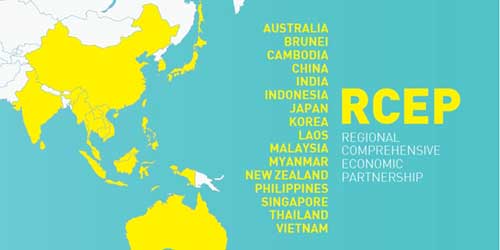
Countries from across Asia are convening in Melbourne this week to negotiate the Regional Comprehensive Economic Partnership (RCEP), a trade deal that would impact almost half of the world’s population, including Thailand, Indonesia, China, India, Japan, Korea, Australia and New Zealand that would undermine environmental protections in Asia.

Trade deals seem to be impenetrable and remote aspects of international legal systems that are disconnected from local and national realities. But in fact the opposite is true.

Trade and investment profoundly impacts local and national issues, and can undermine basic human and environmental rights and key principles of democracy.  

Corporate profit 

The RCEP focuses on trade and investment liberalization, intellectual property rights, services, competition policy – much like other trade agreements

It would influence how governments regulate our economy. The talks go on behind closed doors and lack democratic oversight, so the resulting deal is likely to put corporate profit before public interest. 

Leaked documents show that the proposed RCEP trade deal includes a mechanism called the Investor-State Disputes Settlement (ISDS).

ISDS is, in essence, a corporate court system in which companies can sue countries when they consider that government decisions or national court rulings impact on their profits. 

New research from Friends of the Earth International/Europe, Transnational Institute and Corporate Europe Observatory has uncovered the human impact of these corporate courts, in which governments have been sued for US$623 billion in almost 1000 ISDS cases. This is equivalent to more than four years of the combined global spending on Overseas Development Assistance for poverty reduction.

Environmental protection

In the rice paddy fields of Thailand, local farmers accused a gold mine of leaking toxic waste, causing serious health problems and ruining crops. The Thai government responded by suspending the mine, and later halting all gold mining in the country, while a new mineral law was developed.

But in 2017, instead of compensating the local communities for the harm caused, the Australian mine owners, Kingsgate, sued the Thai government for millions of dollars in compensation. They used the ISDS mechanism that was included in the Free Trade Agreement between Australia and Thailand.

The dispute between Kingsgate, environmentalists and local peoples, who say they had been negatively impacted by the mine, stretches back many years.

In 2010, villagers took the company to court for failing to mitigate damages and for obtaining mining permits illegally. The court ruled that the mine had indeed breached environmental protection laws, and ordered the company to submit an Environmental Health Impact Assessment.

Operations were later suspended at the Kingsgate mine in 2015 for several months, amidst ongoing environmental protests and medical tests which found that hundreds of people living near the mine had high levels of toxic substances in their blood. The company itself acknowledged problems with dust, contaminated water, noise, and cyanide management in its own reports, and researcherscriticised its “lack of true community consultation”.

Democratic procedures

Environmental problems at Kingsgate’s mine occurred after violence had erupted at another controversial mine in the country, the Loei Gold Mine, when over 300 armed, masked men attacked and beat up villagers who were blocking access to the mine.

These problems in the gold sector led the military junta who were ruling the country to halt all gold mines nationwide in 2017 “due to their impact on locals and the environment”. While human rights groups welcomed the closure, the law used in the process has also been criticised, as they empower the Prime Minister to issue any order arbitrarily without following legal and other democratic procedures.

Kingsgate hit back with threats of a multimillion-dollar international arbitration lawsuit. This threat seemed to have paid off. In 2017 the Thai government agreed to lift the suspension on the mine’s operation, which in turn led to a steep rise in the company’s share price.

Yet Kingsgate has not re-opened the mine. Instead it filed the ISDS case under the Thailand-Australia Free Trade Agreement claiming expropriation and seeking damages of an undisclosed amount. According to the national media, the ISDS claim could be worth US$900 million, a figure the government has denied.

Toxic water

While the Australian government views ISDS cases like this one as defending the national interest abroad, it is, rather, a way for corporations to entrench their power at the expense of local communities.

Rather than engaging with national research institutes, the precautionary principle or the local community’s knowledge, the case will be decided by three investment arbitrators, applying narrow investment law in a secret back room process.

The arbitrators’ decision could impact the entire country through the precedent it sets for regulation in Thailand. And while the ISDS case is ongoing, the company has reportedly not rehabilitated the mine that was leaking toxic substances into water sources.

This is not an isolated example. New research has uncovered how afterColombia’s Constitutional Court banned mining activities in a sensitive ecosystem which provides drinking water for millions of Colombians, Canadian mining company Eco Oro sued the country for US$764 million in damages.

When Croatian courts cancelled illegal permits issued for a luxury golf resort in the city of Dubrovnik, Croatia was hit with a US$500 million compensation claim. Romania is defending itself from a shocking US$5.7 billion claim by Canadian mining company Gabriel Resources, after the country’s courts declared the company’s proposed toxic Roşia Montana gold mine illegal.

Accountability

The growing number of corporate lawsuits has raised a global storm of opposition to ISDS and the corporate trade agenda more broadly from across the political spectrum. Two countries party to the RCEP trade negotiations, Indonesia and India, have started to reform ISDS by cancelling Bilateral Investment Treaties.

Yet, as the RCEP is a regional trade deal, if ISDS corporate courts are finally pushed through in exchange for increased market access, it will likely be locked in for years to come.

Given the current global trade wars, governments seem fixated on rushing headlong into new agreements.

Rather than more of the same failed corporate trade models, we need a new trade policy that enables communities and states to hold investors and corporations accountable for their damaging environmental impacts and human rights violations.

The RECP negotiations in Melbourne will test governments’ capacity to look after the environment and their citizens. 

From here: https://theecologist.org/2019/jul/03/corporations-have-hijacked-justice


We need to stop pretending that the “greening” of business is working

We’ve reached a point where the very notion that business is in some way working hard to address our environmental and social challenges is laughable. To the contrary, the evidence strongly suggests that the greatest efforts of corporations is to maintain the status quo.

Another absurd narrative is that billionaires are somehow big-brained problem solvers who are graciously bringing their special skills to the table to address our social and environmental challenges — this is nonsense.

Billionaires are simply good business people who got lucky with a trend and who benefit from a rigged system that allows them to legally avoid paying taxes. 

They certainly don’t deserve the esteemed status that society places upon them. The ability to grow a business does not qualify them to lead solutions to the Earth’s biggest social and environmental challenges.

Throwing big dollars around that should have been paid as taxes should not be a pathway to influencing public policy; like everyone else, influence should arise from democratic channels. 

Can we agree that corporate elites and billionaires are not our saviours for progressive change? In fact, quite the contrary, through their direct and indirect lobbying efforts and subtle influence as “elites” business leaders have delivered a unique form of climate-destroying and wealth-hoarding capitalism that is sending us straight into an existential and climate crisis.

Let’s face it, the “elites” have done everything except tell us directly that they don’t want change.

Those of us who work hard, pay our taxes and follow the rules will find our lives more onerous and precarious as a climate “bomb” sweeps across the planet. But fear not for the billionaires, they will be spared from the coming social collapse.

Private estates and bunkers equipped with industrial-sized greenhouses, water purification systems, giant solar arrays, a small farm with animals and a guarded perimeter will keep the elites and their friends nice and safe while the system that they helped to create implodes.

We can say with our heads held high that until now our desire for leadership and solutions has been so strong that we accepted some pretty far-fetched ideas about business and it’s desire to reverse course and protect the planet.

Perhaps we are a little naive or maybe it is out of pure desperation that we take corporations and their puppet politicians at their word, but in the end they haven’t delivered and won’t.

Meanwhile we continue to witness the continued decline of every major ecosystem on the planet.

The corporate sustainability movement is rigged; it’s controlled by the “winners” of capitalism to complicate, stonewall and resist progressive change. Ask yourself, why is it that when an environmental crisis is identified and change is deemed necessary, the first goal of government policy seems to be about maintaining the status quo and the profits of business even when doing so would clearly be an inadequate response to the crisis? 

Imagine if the corporations and politicians were held accountable both morally and financially for the devastating harm that they have caused during the last 40 years, and stripped of their plundered wealth and assets, and their power handed to the people to democratically run the planet in the best interests of everyone.

https://theecologist.org/2019/jun/19/greening-business

Journalists Killed or Silenced for Environmental Reporting

At least 13 journalists have been killed while reporting on environmental stories around the world in the past decade, and 16 more suspicious deaths are being investigated, according to the U.S.-based Committee to Protect Journalists. Forbidden Stories – a consortium of 40 journalists from 15 media outlets including OCCRP – also found that journalists investigating environmental issues often face arrest, harassment and violence.

Read full story here:

https://www.occrp.org/en/investigations/environmental-investigations-prompt-killing-and-silencing-of-journalists

Banning plastic is not so fantastic

Bans on some single-use plastic products have been a popular but it won’t be enough: plastics demand is rising and will continue to rise through the next ten years at least, Axios reported recently, noting that demand for ethane—the largest feedstock for plastics—will hit 1.7 million barrels per day this year in the US alone, up by 83 percent from 2012.

It is this prospect of rising plastics demand that is spurring a lot more investment in petrochemicals in the Big Oil group. Big Oil goes where the profits are and the environmentalist offensive against internal combustion engines will eventually lead to a decline in oil demand from the transportation sector. Plastics, however, will endure.

Petrochemicals will come to account for more than 33 percent of oil demand growth globally in the period to 2030. By 2050, they will drive half of the global oil demand growth, raising this demand by 7 million bpd by that year, the International Energy Agency said in a report last October.

Petrochemicals are used in thousands of products, with the biggest group among these being single-use plastic products. Yet, even if single-use plastic products are removed from the supply chain, enough demand will remain to drive the consumption of crude oil. Even electric cars need plastics and according to the consensus forecast, the world will need a lot more EVs in the years to come.

BP projects petrochemicals will come to account for as much as 70 percent of the growth in oil demand by 2040. That would be up from 50 percent in 2018. No wonder, then, that Big Oil is focusing on petrochemicals. Despite the opposition despite the likelihood of more stringent measures for reining in our plastics use, the demand will be there and it will be strong enough to justify billions in investments.

https://oilprice.com/Energy/Energy-General/Is-Big-Oils-Plastic-Bet-Going-Sour.html

Repair, Not Replace

We don’t throw away cars with faulty batteries. We expect to fix something when it’s broken. At least we did for a few hundred years.

“We used to have vacuum and TV repair shops, and now it’s garbage trucks taking our stuff away,” ..The very right to keep the products you own for a long time is being taken away, simply because the disposable society is promoted by manufacturers seeking bigger profits for shareholders.

According to the iFixIt website, for every 1,000 tons of electronics, landfilling creates zero jobs, recycling creates 15, and repairing creates 200 jobs.

Excellent read on fighting the corporations and their built in obsolescence here:

https://nextcity.org/features/view/the-case-to-repair-and-not-to-replace

EXXONMOBIL’S SELF-SERVING CLIMATE POLICY

This piece is an extract from a Roarmag.org article on the hidden agenda behind corporate-led reforms and how corporations’ offers to self-regulate are driven by wanting to silence criticism and expanding their own power and influence. It focuses on Exxon Mobil’s support for a carbon emissions tax to combat climate change. This is followed by a news report on how Exxon are heavily committed to growing the production of petrochemicals and plastics as an answer to uncertainty over the future of crude oil use.

EXXONMOBIL’S SELF-SERVING CLIMATE POLICY

In October 2018, ExxonMobil pledged $1 million to support a campaign for a carbon tax. But the donation by the largest US-based producer of oil and gas is no altruistic contribution to combating climate change. It is yet another self-serving corporate reform.

Exxon’s financial support toward climate policy goes toward a proposal championed by Americans for Carbon Dividends, a free-market organization that grew out of the policy think tank Climate Leadership Council (CLC). NPRcommentators summarized the CLC’s carbon tax proposal as raising “the price of fossil fuels to reduce their use and cut the amount of climate-changing carbon released into the atmosphere.” Under this plan the primary focus is to generate short-term revenue, while reducing carbon emissions is considered a mere positive side effect.

While any proposal to cut carbon emission might make environmental activists rejoice at first, there is more to the story. The CLC was co-founded in early 2017 by conservative policy entrepreneur Ted Halstead, and James A. Baker III, a former White House chief of staff and treasury secretary under Ronald Reagan, and secretary of state under George W. Bush. The CLC describes itself as a bipartisan, pro-market organization to “promote a carbon dividends framework as the most cost-effective, equitable and politically-viable climate solution.” Other founding members of the organization include former Federal Reserve chairs Ben Bernanke and Janet Yellen, former Treasury Secretary Hank Paulsen, with financial and infrastructural support coming from US corporate behemoths like Unilever, GM, Proctor & Gamble, and oil giants ExxonMobil, BP, Shell and Total.

Given the “who’s who” slate of political bigwigs and corporate sponsors, it should come as no surprise that the CLC’s proposal intricately embeds and subsumes the pressing issue of combating climate change into a neoliberal market-based scheme that raises the price of fossil fuel in the short run, while simultaneously scaling back EPA regulations against environmental pollution and climate change in the first place.

The CLC is a prime example of American welfare capitalism. The group is touting its support for climate policy while distracting the American people from its own corporate goals and aspirations.

CLC founder Ted Halstead articulated his organization’s agenda most clearly in a TED talk in May 2017: “[T]he road to climate progress in the United Stated runs through the Republican party and the business community.” Halstead argued that the CLC’s carbon dividends plan would result in “less regulation and far less pollution at the same time, while helping working class Americans get ahead.”

Based on the proposition to repeal environmental regulation and to increase prices on carbon-based fuel, it is hardly surprising that ExxonMobil publicly supports the CLC’s carbon tax plan. Behind a thinly veiled and disingenuous veneer of concern about climate change lies an even greater and more genuine concern about the company’s profits and market share.

Moreover, as CLC spokesperson Greg Bertelsen admitted, ExxonMobil and other large corporation are happy to embrace and support regulatory policies like a carbon tax because they all want “regulatory certainty” in order to “know what the rules of the game will be.” In the tradition of Bismarckian controlled progress from above, large corporations want to ensure that reform happens only under their own purview and the parameters that they set.

This type of corporate-inspired climate change policy still forms the basis for establishment politicians in their quest for public support, with Joe Biden’s andMichael Bloomberg’s respective plans to combat climate change each representing yet another public show of capitalist benevolence to reform at a time when the stakes could hardly be any higher, and when anything less than a full, genuine commitment to combating climate change is unacceptable.

Exxon, Saudis Bet on Plastics Growth in Giant Gulf Coast Plant

Exxon Mobil Corp. and Saudi Arabia’s state-controlled petrochemicals company formally approved construction of a new chemical complex in Texas that will process production from the Permian Basin’s booming oil and natural gas wells.

The project near Corpus Christi will be the world’s largest steam cracker and create $50 billion of “economic output” in the first six years, Exxon and Saudi Basic Industries Corp., known as Sabic, said in a joint statement on Thursday. The facility will convert hydrocarbons such as ethane and propane to ethylene, a chemical used to make everything from plastics to antifreeze.

Industry executives have been lauding chemicals as an emerging driver of global oil and gas markets. Earlier this week, BP Plc Chief Economist Spencer Dale earlier predicted petrochemicals will dominate energy demand growth for the next two decades.

Plastics and chemicals are seen as increasingly vital to Big Oil’s future given uncertainty over crude demand and the push toward electric vehicles and cleaner energy sources. But some of the world’s most-advanced economies are increasingly clamping down on single-use plastics such as shopping bags and straws.

That hasn’t scared off Exxon. This year alone, the oil giant approved major expansions to its giant Baytown petrochemical complex and Beaumont refinery in Texas as well as a plastics unit in Louisiana. CEO Woods, former head of the company’s downstream division, sees the plants as essential to making money all the way from the wellhead to the final products.

~~~~

These two pieces show clearly how a corporation will often support reform efforts in order to detract from more wide-ranging demands  that could really damage  their interests. 

Corporations have always offered support to state -led reforms to varying degrees to quell unrest, but all the while advancing their own agendas and expanding their own economic opportunities.

Meanwhile the public may get, some marginal benefits but leaving the bodies that produce the problem in the first place intact, and often stronger.